
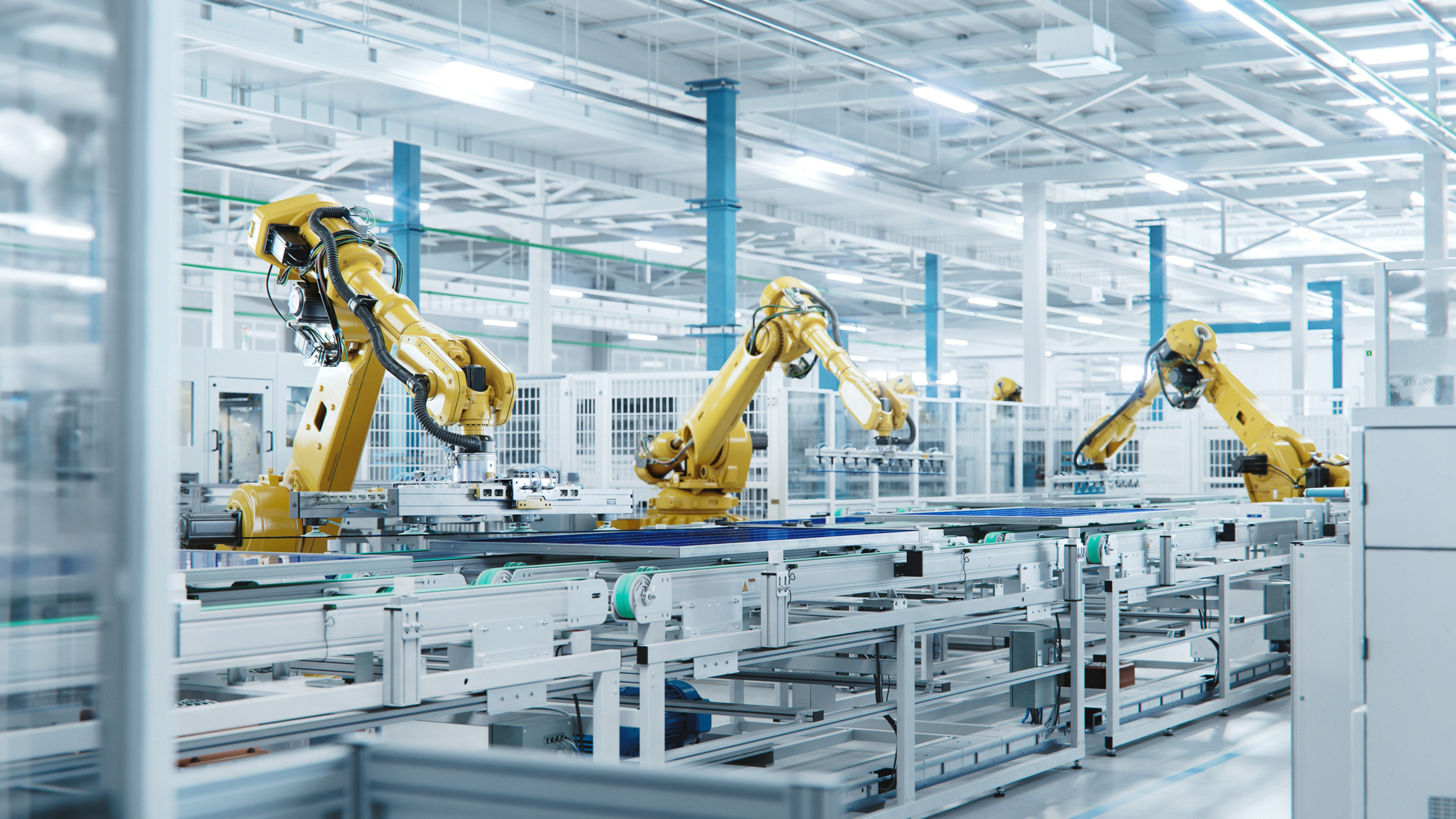
OPTIMIZING OPERATIONS THROUGH ROBOTICS & AUTONOMOUS SOLUTIONS
Autonomous tech engineered
for your modern business
Robotics and autonomous systems built for manufacturing floors, fleets, warehouses, construction sites, and data centers — wherever physical work happens.
From assessment to operation —
one continuous partnership
Every deployment starts with the right architecture
Before a single robot or autonomous system goes live, Velociti evaluates your operational challenges, environment, and objectives — across production floors, warehouses, job sites, and vehicle fleets — then architects the right mix of automation for your goals.
Operational & Environment Assessment
We evaluate production floors, warehouse layouts, job sites, and facility footprints to identify where AGVs, AMRs, or autonomous systems create the most value.
Infrastructure Readiness Planning
Charging infrastructure, secured storage, and networking upgrades are mapped out — on a production line, in a warehouse, or on a job site — to support real-time autonomous communication.
Compliance-First System Design
Cybersecurity and regulatory compliance are engineered into the architecture from day one, so systems operate safely on your floor, your site, or inside your facility.
Deployed across production floors, warehouses, job sites, fleets, and facilities
Velociti implements comprehensive robotics and autonomous technology so your operation runs leaner, safer, and around the clock — from goods-to-person warehouse robotics to autonomous material handling on the production floor to fleet-wide vehicle autonomy, backed by security built for regulated environments.
Warehouse & Production Robotics
AGVs and AMRs — including goods-to-person systems — move inventory and materials for teams on the floor, whether that’s warehouse picking or work-in-process transport on a production line.
Autonomous Equipment Integration
From driver-assistance systems to fully autonomous operation, autonomy is layered into your existing fleet vehicles, forklifts, and heavy equipment — on the road, the production floor, or the job site.
Security & Compliance Systems
Robust cybersecurity protocols and regulatory compliance measures keep every autonomous system operating safely within local regulations — from OSHA to industry-specific standards.
We keep autonomous systems running long after go-live
VeloCare delivers proactive, unlimited support — unlimited repairs, real-time monitoring, and scalable solutions that keep autonomous technology operational as your business grows. No limits. No boundaries. Just results.
VeloCare Systems Monitoring & Predictive Maintenance
24/7 oversight of every robotic and autonomous system, paired with AI-powered analysis that anticipates failures before they occur.
Regulatory & Performance Intelligence
Ongoing compliance monitoring as regulations evolve, plus comprehensive reporting on efficiency gains, cost savings, and ROI.
Updates & Emergency Response
Regular software and firmware updates keep navigation and security current, backed by rapid technical support when critical failures occur.
Comprehensive solutions built to enhance efficiency, reduce costs, and scale operations
Velociti provides comprehensive robotics and autonomous technology solutions for manufacturing, fleet, warehousing, construction, and data center operations looking to enhance efficiency, reduce costs, and improve operational capabilities.
Production & Warehouse Robotics
Automated guided vehicles (AGVs) and autonomous mobile robots (AMRs) move inventory and materials for teams on the floor — from goods-to-person warehouse picking to work-in-process transport on the production line.
Autonomous Equipment Integration
We implement varying levels of autonomous capability into fleet vehicles and heavy equipment, from driver-assistance systems to fully autonomous operation on the road, on production floors, and on job sites.
Security & Compliance Systems
Robust cybersecurity protocols and regulatory compliance measures ensure autonomous systems operate safely and securely under local regulations — on a factory floor, a job site, or inside a data center.
VeloCare Managed Services
Proactive, unlimited support for your robotics and autonomous systems — unlimited repairs, real-time monitoring, and scalable solutions that keep technology operational as you grow. No limits. No boundaries. Just results.
Key opportunities across manufacturing, fleet, warehousing, construction & data centers
From the production floor to the last mile, autonomous systems address the operational pressures manufacturers, fleet operators, warehouse teams, contractors, and facility operators face every day — labor shortages, rising costs, and growing sustainability demands.
Material handling & delivery optimization
Whether it’s parts moving across a production floor, pallets through a warehouse, or packages on the last mile, autonomous material handling can dramatically cut operational costs compared to traditional methods — while making handoffs and delivery windows far more precise. The broader autonomous delivery market alone is projected to grow at a 21.5–24.4% CAGR through 2033.
Labor Shortage Mitigation
Manufacturing, construction, and transportation are all short on skilled labor right now. A projected shortage of 82,000 truck drivers in 2025 is just one signal — autonomous technology helps close workforce gaps wherever physical operations are understaffed.
Operational Cost Reduction
Autonomous systems remove costs tied to wages, healthcare, insurance, and overtime — enabling 24/7 operation on the floor or the job site without additional labor expense.
Enhanced Safety & Compliance
Advanced systems have reached Level 4 autonomy in controlled environments, meaningfully reducing accident risk on the floor, the site, and the road while improving regulatory compliance.
Environmental Impact Reduction
Electrified, autonomous systems support sustainability goals across the board — from forklifts and material handlers to delivery vehicles that cut emissions and reduce idling.
Warehouse & Production Efficiency
Goods-to-person robotics bring inventory and materials to workers at high speed, cutting walk time and improving accuracy on the warehouse floor or the production line.
Data-Driven Decision Making
Every autonomous system generates operational data — continuously refining routing, throughput, and energy efficiency across your operation.
Questions customers ask us most
Straight answers to what manufacturing, fleet, warehousing, construction, and data center teams want to know before adopting robotics and autonomy.
Options range from production-line robotics and warehouse automation to autonomous vehicles, heavy equipment, and specialized applications like autonomous hull-cleaning for maritime fleets. The right fit depends on your operational challenges, environment, and objectives.
Most operations see ROI within 18–36 months through reduced operational costs, greater efficiency, and improved output. Exact payback depends on deployment scale, application type, and existing infrastructure.
Our solutions connect to your current operations and asset management platforms through API and middleware integrations, giving you unified monitoring and control across both conventional and autonomous assets.
Commercial robots have reached Level 4 autonomy in designated areas — on production floors, in warehouses, and on the road — operating without human assistance within defined parameters. Most open, unstructured environments still run at Level 2–3 today, requiring some human oversight.
We provide regulatory guidance tailored to your operating locations and continuously monitor evolving rules, with compliance built into system design so features can adapt as regulations change.
Requirements vary by system type, but can include charging infrastructure, secured storage, networking upgrades for real-time communication, and facility modifications to accommodate robot movement.
We provide training for everyone who interacts with the systems — operators, maintenance staff, and management — through a phased rollout that lets teams adapt gradually.